
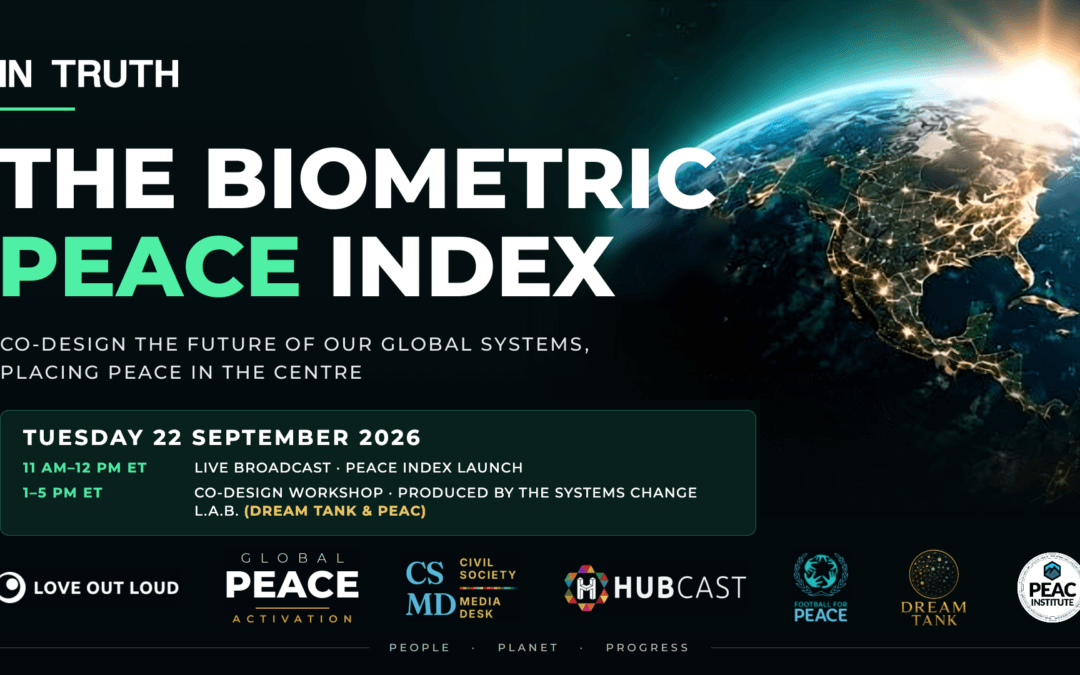
That morning, In Truth launched the Biometric Peace Index, the first measure of peace from the inside. That afternoon, a Systems Change L.A.B. gave the people it measures a say in what it becomes.
By Heidi Cuppari, Founder of Dream Tank. Dream Tank and the PEAC Institute designed and facilitated this Co-Design Workshop through the Systems Change L.A.B.
On August 8, In Truth’s Global Peace Activation brought 131 communities together for a synchronized meditation. People wore the devices they already owned and journaled how they felt. Heart rates dropped by about 10 BPM. Pleasant feelings rose from 55% to around 83%. The new Index went from roughly 50 to 80.
A number only matters if it changes decisions. So after the press conference, the question went to the room: if our systems were designed around what people tell us creates peace, what would become possible? To answer it, we used the Systems Change L.A.B. arc, the same four stages young people in Colorado use to take on problems in their own cities.
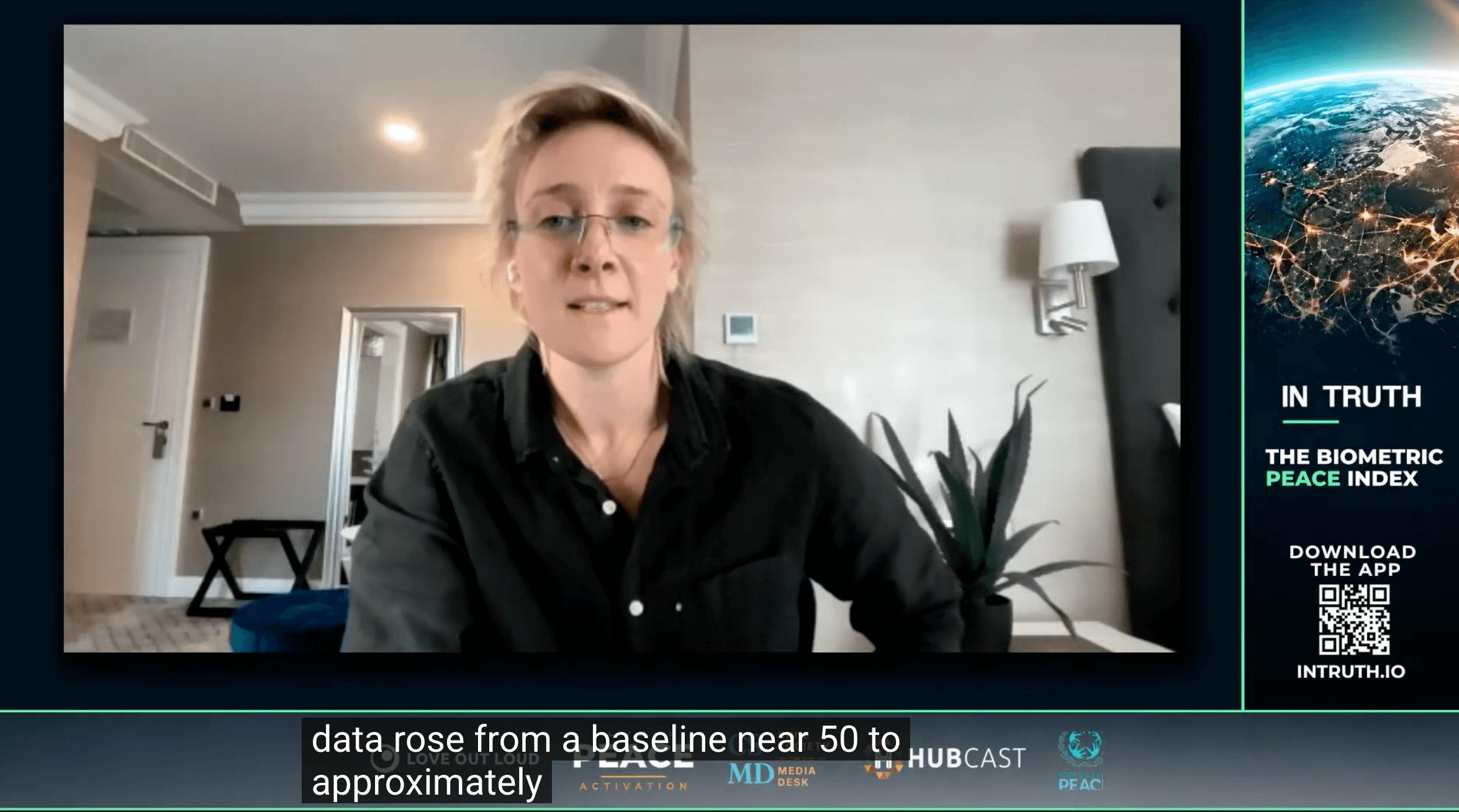
“The world has spent a long time counting what breaks us, but today we start counting what holds us together.”
Nicole Gibson, Founder, In Truth
One room, not an audience
People joined in person in New York and on Zoom from Brazil, across the U.S. and beyond: filmmakers, occupational therapists, community mentors and In Truth’s own science team. Every block had an online task, and no one online went more than fifteen minutes without being asked to contribute.
How the four hours worked
The Systems Change L.A.B. arc, run as one hybrid room in New York and online.
Heal
The workshop opened with a bowl, a breath and a bell. Each person silently named one thing they love enough to protect, and carried it as their compass for the afternoon. Then the room listened to the August 8 data, and before any adult analysis, it heard the youngest voice first: a line read word for word from a Boulder child’s peace map.
Dream
Eyes closed, sixty seconds: It is September 22, 2036. The Peace Index has been guiding decisions for a decade. Walk through your neighborhood. Each group came back with three possibilities and one question.
Build
The questions got practical fast. How do you measure 17,000 kids at a Football for Peace event affordably? What can a festival or concert teach a research study? How could intergenerational mentorship and home kits for mothers strengthen a community’s signal? One idea took hold in both rooms: a global youth hackathon asking young people how they would design the Index.
Launch
The close was a harvest, not a debate: questions to explore, ideas to test, research areas, questions to take back to communities, and ways to keep co-designing. Each person finished one sentence, “What I carry back to my community is…”, and then everyone, in the room and online, took one shared breath with the biometrics running.
“The beginnings of a dream come true on a very deep level.”
Nicole Gibson, at the close of the day
Why this matters
The Systems Change L.A.B. starts from one idea: the people closest to a problem should help design the solution. In Golden, that means a nine-year-old’s question about sharing the street becoming a Mines capstone. At the Peace Index, it meant the communities who offered their heartbeats helping decide how that data is used. Everything the room surfaced belongs to the Peace Index initiative and goes back to the communities that offered it.
A follow-up working session is now pulling together what the room surfaced, to shape the next version of the Index.
Want to run a Systems Change L.A.B. with your community, company or city? Write to heidi@dreamtank.co.
The Biometric Peace Index and the August 8 dataset belong to In Truth and its partners. The co-design workshop was facilitated by Dream Tank and PEAC Institute through the Systems Change L.A.B., with broadcast by Hubcast.
Dream Tank is a Colorado nonprofit that has worked with 10,000+ young people, incubated 80+ youth ventures, and helped shape three Colorado laws. The Systems Change L.A.B. is co-created with the PEAC Institute.

Recent Comments