
Why the Systems Change Lab matters now — and how we’re standing with students
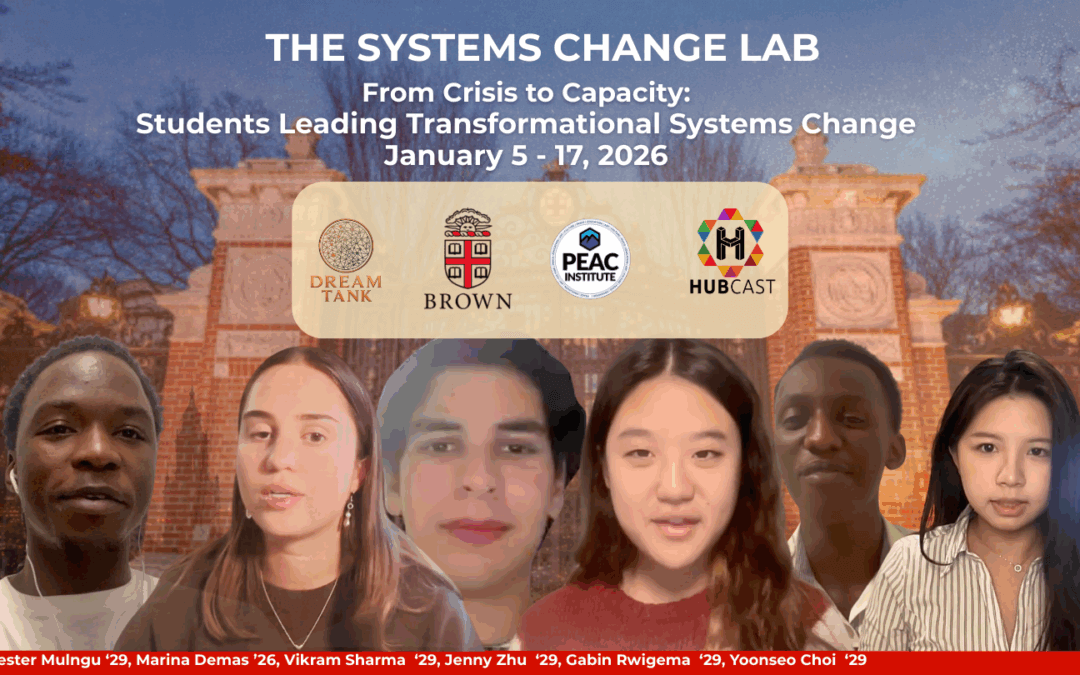
In November, we announced the launch of the Systems Change Lab at Brown University — a two-week, youth-led and mentor-guided process designed to help students map complex systems, identify what’s missing, and prototype pathways forward together.
The Lab was not designed in response to a single event. It was created because young people have been telling us for years that the systems they are inheriting — education, governance, media, health, economics — are no longer working as promised, and that they want tools, language, and support to redesign them.
What recent events on campus did was not create this work, but confirm its necessity.
They brought into sharp focus exactly why the Systems Change Lab was designed the way it was — and clarified where it needed to begin.
A Lab Designed for Moments Like This
The Systems Change Lab is built on a simple premise:
when systems fail, the people most affected should not be left alone — and they should not be treated as passive recipients of solutions.
Students are invited into a structured, facilitated process where they:
-
name what isn’t working
-
map the systems shaping their lives
-
identify what’s missing
-
and design responses together, supported by mentors and intergenerational partners
This work was always meant to be adaptable to place and moment. When students shared how recent events were impacting their sense of safety, agency, and ability to imagine the future, we listened — and allowed the Lab to begin there.
This wasn’t a pivot. It was the design doing its job.
Beginning with Safety, Care, and Agency
In systems work, sequencing matters.
You can’t meaningfully redesign systems if people don’t feel safe enough to think, connect, and imagine.
By allowing safety, care, and agency to become the first system addressed, the Lab creates the conditions for deeper work to follow — not only on crisis response, but on education, culture, governance, economics, and the many other systems students want to engage.
This approach reflects years of learning through Dream Tank: lasting systems change doesn’t come from imposing solutions, but from creating environments where people can think clearly, act collectively, and lead from lived experience.
Standing With Students — An Intergenerational Effort
Alongside the Lab, we’ve seen a natural call for intergenerational support — alumni, parents, educators, and community members asking how they can stand with students in ways that are grounded, respectful, and real.
In response, a student-supported GoFundMe campaign has been launched to help resource the work with care — supporting coordination, facilitation, documentation, and student stipends so participants can engage fully.
👉 Support the campaign here:
https://www.gofundme.com/f/brown-students-building-systems-of-care-clarity-and-agency
This campaign is not about rescuing students or rushing to answers. It’s about ensuring that students have the time, space, and support to do the work they are already stepping into.
Looking Ahead
The Systems Change Lab runs January 6–17, 2026, culminating in a live Global Broadcast on January 17, where students will share what they’ve learned, designed, and proposed — just before returning to campus.
This Lab is both a complete experience in itself and the foundation for a model that can be adapted in other schools, communities, and bioregions — before systems break, during moments of disruption, and as futures are rebuilt.
What’s happening at Brown is not an exception. It’s a signal.
And the question before all of us is not whether young people are ready to lead — they already are — but whether we are willing to stand with them as they do.
With care,
Dream Tank
Systems Change Lab @ Brown University

Would you suggest a way for Community Colleges (I am teaching in Sacramento CA) to link in?