
Golden, Colorado · September 2026
A nine-year-old asked how we share the street. Nine Mines seniors chose it as their capstone.
In August, a room of nine- to eighty-year-olds in Golden asked how we all share the same street safely. Thirty-four days later, nine Colorado School of Mines seniors signed on to spend their final year answering it — for Golden, and for every city that comes next.
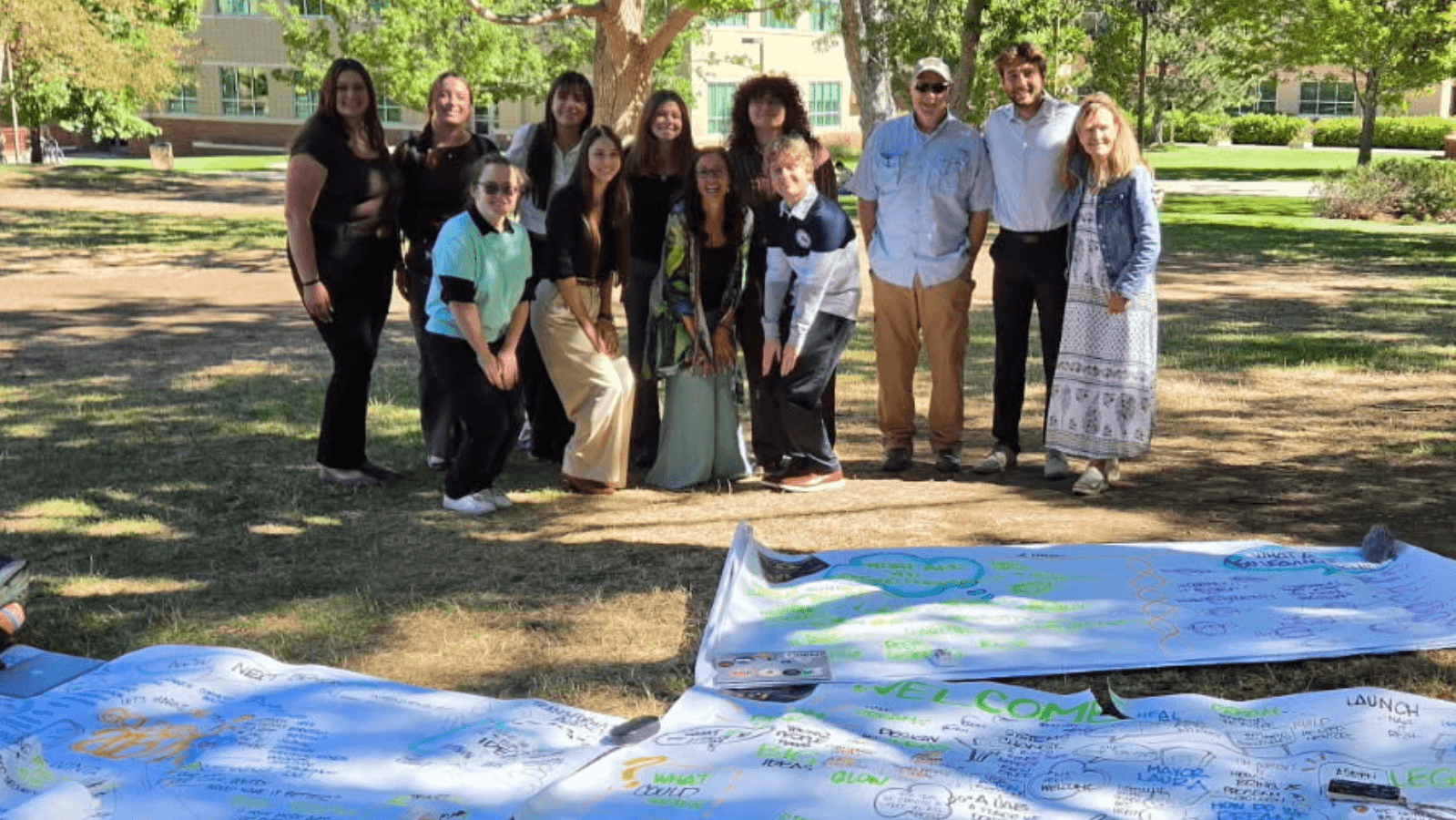
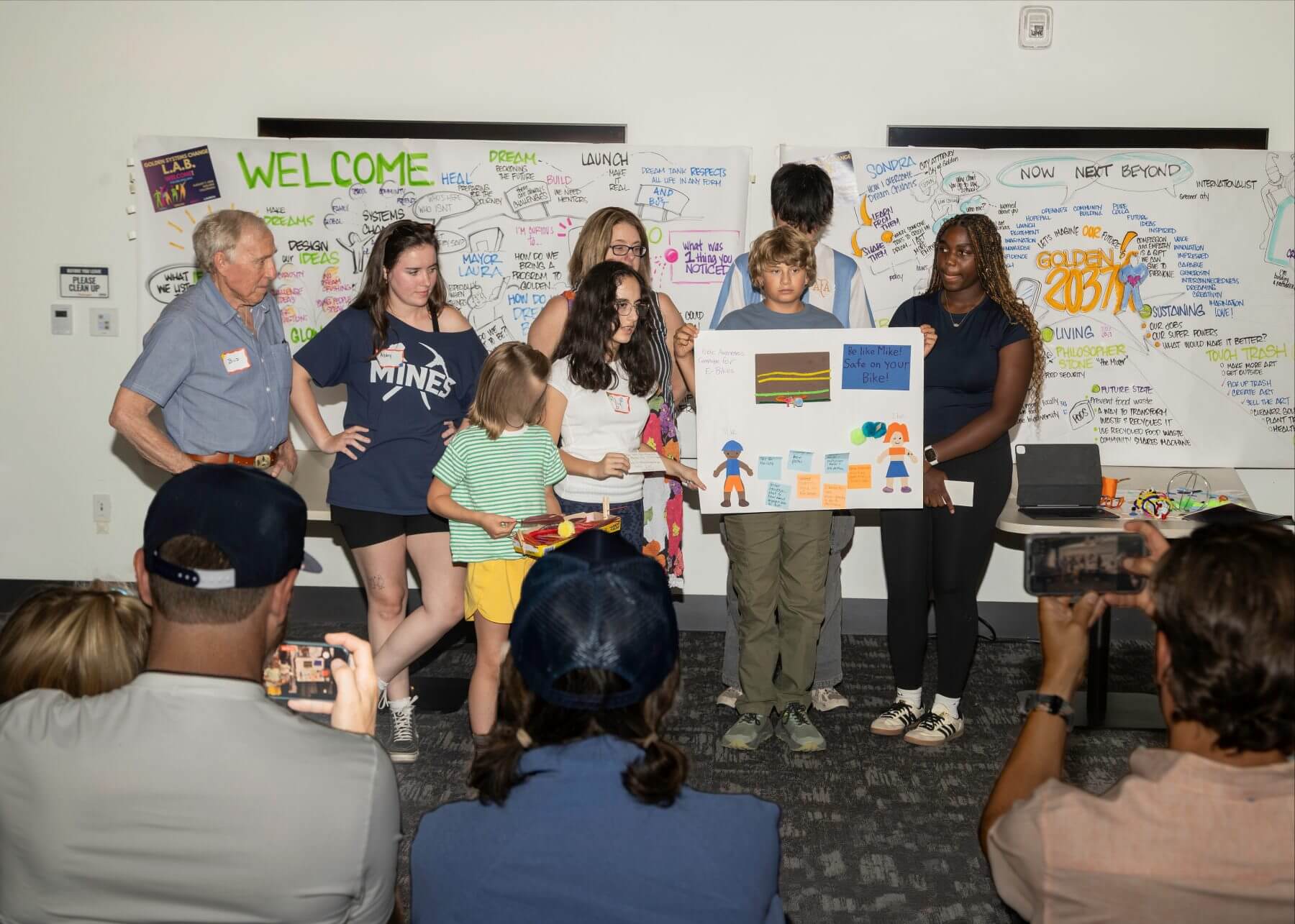
On August 7, nearly forty people between the ages of 9 and 80 spent a full day at Colorado School of Mines working on Golden’s problems together. Design pods — each holding two elementary students, a high schooler, a college fellow, and a Dream Tank alum — worked alongside community mentors, engineers, civic leaders, and elders. The mayor gave the entire day. Two intergenerational teams each presented a different approach to the same challenge: how people on foot, on bikes, and on e-bikes share the same right of way without hurting each other.
Nobody wanted that to end with a poster on a wall.
On September 10, it didn’t. A senior capstone team at Mines kicked off with the Systems Change L.A.B. as its client, a signed sponsor agreement, and nine months to work. Nine college seniors. Five engineering disciplines. One problem a nine-year-old put on the table.
“Community input must directly inform engineering decisions.”
From the team’s own project requirements, written before the first listening session
The problem, as the team wrote it
Golden’s streets, crossings, and shared-use paths carry many modes of travel with no effective way for the people using them to detect one another and avoid conflict. The goal is a practical, tested solution that makes those shared paths safer for everyone. The specific site, the specific conflict, and the final solution are all still open — deliberately. Those answers are supposed to come from the community, not from a conference room.
Two deliverables, on purpose
01 · A real solution
Something Golden can actually act on: designed, prototyped, and tested with the people who use the right of way every day, to a standard a professional engineer would stamp.
02 · A replicable model
A community-sourced engineering template the next city can pick up and run. This cohort is the first to prove it works — and the published model carries their names.
Meet the fellows — the Dream Team
They named themselves. Six of them found this project at the senior design expo and chose it. Here they are, in their own words.
“I’m particularly passionate about creating spaces that bring people together and feel heard. I love seeing change enacted, and being a part of this project is an honor.”
Communication lead
“I loved building something that served the traveling public by keeping them safe. This project is the perfect continuation of my interests — working with, and for, my community.”
“My favorite part of the industry is building infrastructure that serves the community and creates a lasting impact. I’ve trained for my first marathon on Golden’s trails — I know how people use them.”
“Two years mentoring high schoolers in FIRST Robotics showed me the importance of creating spaces where young people feel heard and empowered to contribute.”
“Pedestrian safety in Golden, especially for youth, caught my eye when I moved here in 2023. When I found out I could address it through senior design, I knew it was the one.”
“I’ve spent a lot of time outside my whole life. A system that keeps our community safe while people are out in it — I knew I wanted to be part of that.”
“Roadway design pulled me toward transportation. I love hearing different stories, which makes me excited for a community-focused project — for Golden and places like it.”
“Growing up in a small town, I worked closely with my city leaders and saw how infrastructure directly impacts the people who live there. Transportation shapes accessibility and quality of life.”
“I fear for people I know, and for myself, with the way all the modes of traffic mix on our streets and sidewalks. Making plans for the community, with the community — that sold me.”
Nine months, four gates
Why this one is different
A city of 20,000 is functioning as the incubator. The mayor assigned city engineering support to student-led work. Nine-year-olds set the agenda in August and will sit in the listening sessions this fall. The young people follow the Dream Tank Method — HEAL, DREAM, BUILD, LAUNCH — alongside their Mines process, and the pre-work that framed their first week came from the Epiphany Lab, adapted with permission from Janine Underhill, Visual Futurist.
Every two weeks for nine months, the client and the team meet for thirty minutes. When they need an expert — a rail engineer, a bike-industry veteran, a city planner — they name the person and we open the door. That is the model we are trying to make repeatable.
Who made this possible
The Mines program is community-funded by design — a blend of philanthropy and civic investment that keeps the work locally rooted. The Johnston Education Fund (an impact innovation ecosystem funder), the City of Golden, Colorado School of Mines, the Golden Civic Foundation, Bob’s Atomic Burgers, and the Colorado Gives Foundation each backed it. The City of Golden gave staff time and the mayor’s full day; PEAC Institute co-created the Systems Change L.A.B. Mark Bowman advises the team from the Mines side; Pete Turner and JJ Trout mentor from the community side.
What happens next
Listening sessions open this fall in Golden — residents, riders, walkers, drivers, city staff, and the young people who started this. If you live, ride, or work in Golden and want to be in the room, or if you have expertise this team should borrow, write to heidi@dreamtank.co.
A problem named by a nine-year-old, engineered by nine young adults, and adopted by a city. This is what youth-powered systems change looks like when it’s built to last — and you can help carry it to the next city.
Championed by Mayor Laura Weinberg and the community members of Golden, Colorado.
Dream Tank is a Colorado nonprofit that has worked with 10,000+ young people, incubated 80+ youth ventures, and helped shape three Colorado laws. The Systems Change L.A.B. is co-created with the PEAC Institute.
